

AI Video Production Company: How an Early Start Turned Into Delirio’s Biggest Edge
Delirio AI is an AI video production company and AI VFX studio: an AI-native film studio that has been making footage with generative models since 2024, when the tools could barely hold a shot together. That head start is now its biggest advantage, because every lesson learned the hard way makes today’s far more capable tools go much further.
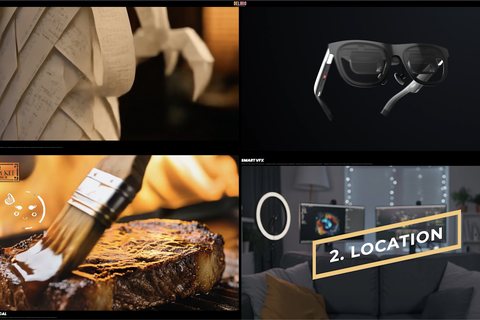
Summary: why an early start matters in AI video production
- Who: Delirio AI, an AI-native video production company founded in 2024.
- Thesis: teams that started when generative video was crude built methods, discipline and resilience that newcomers lack, and those compound with every new model.
- What it produces: commercials, brand films, key visuals and AI footage, plus AI VFX (Smart VFX) and 3D-to-AI work, as an extra department for production companies and agencies.
- Proof: the first 21 seconds of the Wallapop spot with Borja Iglesias (24 September 2026) and a Kodak Precise Next Lenses ad for EssilorLuxottica.
- Team: directors Albert Montero, Deka Brothers, Gami Orbegoso, Ignasi AO and Pablo Rivera.
- Responsible by design: every step documented, commercially licensed tools only, EU transparency code signatory, pieces certified with VeriqX.
- 2024Year Delirio AI was founded.
- 3 challengesPrecision, project chaos and ethics: the problems the studio solved from day one.
- 5 directorsFrom film, music video and advertising.
- 100 %Commercially licensed, documented tools.
Anyone can generate a clip today. What separates a studio that delivers broadcast-ready work from one that produces impressive demos is not access to the newest model, it is everything the team learned while the models were still hard to control. This article explains why that learning curve matters and how Delirio turned it into a working method.
Starting when AI video could barely hold a shot
When Delirio AI began in 2024, generative video was a different medium. Clips lasted a few seconds, faces drifted from one frame to the next, camera language such as shot sizes and perspectives was frequently misread, and nothing guaranteed that the same prompt would give the same result twice. Making anything that looked like a film meant fighting the tool on every shot.
That is precisely why starting early was valuable. A studio that works under those conditions cannot rely on luck, so it has to invent ways of getting predictable results out of unpredictable models. Those habits did not become obsolete when the models improved; they became the foundation for using the new power well.
What the early years taught us: precision, order and ethics
Working with imperfect tools taught the team three lessons that still define how Delirio produces. They are also the three problems the studio set out to solve with its own research and proprietary software.
- 1
Bring precision to an imprecise tool
Models struggle with the technical language of cinema and add randomness. Delirio chooses, shot by shot, between text-to-image, image-to-video and text-to-video, and builds references so the result is intentional rather than lucky.
- 2
Tame project chaos
A single sequence can need hundreds of prompts, images and clips. Strict project management keeps AI “slop” from overwhelming a production and lets the team find, compare and reuse the right material.
- 3
Work ethically and transparently
Every step of the creative process is documented, so no resource that breaks copyright or ethical standards enters the pipeline. Documenting early made compliance a habit rather than a late scramble.
The original toolkit combined video models such as Sora, Runway, Kling and Hailuo AI MiniMax with image tools such as Freepik Mystic, Midjourney, Flux and Google ImageFX. Learning when each one earns its place, and when to switch, is craft knowledge that only accumulates with hours of real production.
Why early experience compounds with today’s models
Today’s models are far more capable, but capability alone does not make a good commercial. A team that already knows how to lock a character, organise a canvas of references and document each decision can hand a stronger model a much better brief, and gets far more out of it than a newcomer starting from a blank page.
There is also a resilience effect. After hundreds of projects where the tool failed in new ways, the team stays calm when a shot breaks, because it has seen a version of the problem before. That is how deadlines are met without compromising quality.
The clearest recent example is the Wallapop campaign “Vendedores” with footballer Borja Iglesias, launched on 24 September 2026. Delirio generated the first 21 seconds with AI for the agency This is Odd, and live action takes over from second 22, a transition viewers do not notice.
A second recent piece shows the range: a Kodak Precise Next Lenses ad produced with AI for EssilorLuxottica, where brand fidelity and a polished commercial finish mattered as much as speed.
AI studio and AI VFX: what Delirio offers
Delirio AI is both a generative AI studio and an AI VFX studio: it creates images and video with artificial intelligence and finishes them with high-end post-production and visual effects. That combination is what lets it deliver broadcast-ready AI video production rather than loose clips.
The visual-effects arm is called Smart VFX and is delivered with Herokid Studio: a single solution covering product integration, advanced retouching and final artwork, always the smartest route to the result. It solves what generative AI cannot yet guarantee on its own: exact logos, legible labels and faithful brand colours.
| AI video production | Commercials, brand films and digital content created with generative AI, from idea to delivery, with film and advertising direction. |
|---|---|
| Smart VFX (with Herokid Studio) | Product integration, advanced retouching and final artwork combining AI and traditional VFX; brand precision in every shot. |
| 3D to AI | The product or scene is modelled in 3D and acts as the technical base from which AI generates the final image, with exact control of shape, framing and lighting. |
| AI key visuals | The main campaign image and its adaptation to print, outdoor, DOOH, press, point of sale and social media. |
| Multilingual lip-sync | The same spot in several languages with synchronised voice and lip movement, plus casting, locations and product adapted to each country. |
| Animatics and previsualisation | AI-driven pre-production to visualise shots before shooting or producing: animated storyboards and visual tests. |
| Custom AI footage and stock | Impossible shots, places that do not exist and tailor-made footage to integrate into live-action productions. |
| AI training and consulting | For agencies and brands: AI-ready briefs, tool evaluation, workflows and transparency under European rules. |
For production companies and agencies, the studio works as an AI post-production and visual-effects unit that joins the team: it receives the brief, proposes the treatment and delivers masters and versions ready for TV, digital, social and outdoor.
The directors behind the work
Delirio’s directors come from film, music video and advertising. They bring narrative, framing, rhythm and direction of performance to AI, which is why a tool-savvy studio and a director’s eye reinforce each other. Watch each reel below.
-
Albert Montero
Barcelona-based director who moves between live action and AI production. He founded his own production company at 22 and has directed commercials for Ikea, Nike, Adidas, Bentley, L’Oréal, Ubisoft, Carrefour and Dunkin’ Donuts for agencies such as BETC, Publicis, Havas, TBWA, Ogilvy, FCB and DDB. His films have screened at Sitges and been recognised at the Epica Awards and in Runway’s AI film competition. Creative director at Sauvage.tv since 2024, where he has supervised AI work for Pepsi, Gatorade, Powerade and Under Armour. He directs performance as on a real set, so the result does not look like AI.
-
Deka Brothers
Ben and Julien Deka are French filmmakers based in Los Angeles. They won the 2012 MTV Video Music Award for Best Visual Effects for a Skrillex video, have directed for Gojira, Opeth and Carpenter Brut and for labels such as Atlantic Records, and have made advertising for JBL, Cox and StockX.
-
Gami Orbegoso
Director who blends traditional cinematography with generative innovation, under the motto “AI is the tool, but human passion is the engine.” Trained in acting at performing-arts schools in Barcelona and in independent cinema, with recognition at festivals such as Slamdance, he brings meticulous care for atmosphere, composition and visual storytelling.
-
Ignasi AO
Filmmaker and visual artist who mixes cinematic language, narrative and visual experimentation to create advertising, fashion and music pieces, exploring AI and visual effects with an author’s eye. Years of traditional filmmaking gave him a personal universe; AI let him make pieces with character: sometimes delicate, sometimes enigmatic and often brutal.
-
Pablo Rivera
Director working across AI and live action, with more than 15 years in commercials and branded storytelling before moving into AI-led filmmaking. His work blends cinematic craft with the visual language of contemporary culture, and is influenced by fashion, sport and hype culture, which helps brands stay current, distinctive and creatively ambitious.
An extra department for production companies and agencies
Delirio does not compete with traditional production companies; it complements them. As a specialised house for AI-generated clips, it slots into audiovisual projects like one more department, working side by side with directors, creatives and producers so the AI footage fits the rest of the production.
The studio also invests in research, experimentation and proprietary software, designed to make AI workflows more precise, efficient, organised and ethical. That is the long-term payoff of starting early: the tools Delirio builds today exist because it ran into the problems first.
Responsible by design: documented, licensed, certified
Because documentation began on day one, responsible practice is part of the workflow. Delirio uses commercially licensed tools only, keeps a record of how each piece was made, and signed the EU Code of Practice on transparency of AI-generated content, the voluntary instrument that helps providers meet Article 50 of the EU AI Act.
Pieces are also certified with VeriqX: the creation record is anchored with an eIDAS qualified electronic timestamp and a C2PA content credential is embedded in the file, so provenance travels with the work.
Delirio AI at a glance
| What it is | AI-native video production company |
|---|---|
| Founded | 2024 |
| Offers | AI video production, Smart VFX (AI VFX), 3D to AI, key visuals, multilingual lip-sync, animatics, AI footage for production companies and agencies, training and consulting |
| Recent work | Wallapop with Borja Iglesias (first 21 seconds, with This is Odd); Kodak Precise Next Lenses for EssilorLuxottica |
| Directors | Albert Montero, Deka Brothers, Gami Orbegoso, Ignasi AO, Pablo Rivera |
| Compliance | EU Code of Practice signatory; VeriqX certification (eIDAS + C2PA); commercially licensed tools |
| Markets | Spain, Europe, United Kingdom, United States |
| Contact | studio@delirio.ai · delirio.ai |
Frequently asked questions about Delirio AI and AI video production
What is Delirio AI?
Delirio AI is an AI-native video production company founded in 2024 that creates film footage, commercials and brand content with generative AI. It works for advertisers and alongside production companies and agencies, with a roster of directors from film and advertising.
What does AI-native mean for a production company?
It means the studio was built around generative AI from day one rather than adding AI to a traditional pipeline later. Its processes, shot planning, project management and documentation were designed for AI tools, not adapted to them.
Why does starting early matter in AI video production?
Early tools were imprecise, short and unpredictable. Working with them forced the team to build methods for controlling shots, organising thousands of generations and documenting every step. That accumulated experience and resilience lets Delirio get far more out of today’s far more capable models.
Which AI tools does Delirio use?
The studio works with a mix of video models (including Sora, Runway, Kling and Hailuo AI MiniMax) and image tools (including Freepik Mystic, Midjourney, Flux and Google ImageFX), choosing for each shot between text-to-image, image-to-video and text-to-video. Only commercially licensed tools are used.
Does Delirio compete with traditional production companies?
No. It complements them, acting as an additional department for AI-generated shots inside a larger production, in close collaboration with directors, creatives and producers.
What was Delirio’s most recent project?
The Wallapop campaign with footballer Borja Iglesias, launched on 24 September 2026. Delirio generated the first 21 seconds with AI for the agency This is Odd; live action follows from second 22. Delirio also produced a Kodak Precise Next Lenses ad for EssilorLuxottica.
How does Delirio keep AI work ethical and transparent?
Every step of the creative process is documented so no resource that violates copyright or ethical standards is used. The studio signed the EU Code of Practice on transparency of AI-generated content and certifies its pieces with VeriqX (eIDAS qualified timestamp and C2PA credential).
Who directs Delirio’s productions?
Albert Montero, Deka Brothers, Gami Orbegoso, Ignasi AO and Pablo Rivera, directors from film, music video and advertising.
What is AI VFX?
AI VFX is the creation and retouching of visual effects by combining generative artificial intelligence with traditional post-production techniques. At Delirio it is called Smart VFX: it integrates the product, retouches shots and makes sure logos, labels and brand colours match the original.
Is Delirio a VFX studio as well as an AI production company?
Yes. Delirio generates images and video with AI and delivers VFX and post-production with Herokid Studio, so a single delivery covers everything from generation to final finishing.
How is an AI-native studio different from a traditional production company?
An AI-native studio plans, manages and documents every project around generative tools from the start. That brings speed, more versions and shots that would be impossible to film, without giving up the classic process of brief, treatment and delivery.
What is 3D-to-AI production?
A workflow in which the product or scene is modelled in 3D and that technical base guides the AI-generated image, preserving shape, framing and product details exactly.
How can I hire Delirio AI?
Email studio@delirio.ai or info@josepgutierrez.com with a short brief. Delirio replies with a tailored proposal, and when useful, a visual test before starting.
Key terms
- AI-native production company
- A studio built around generative AI from the start, with processes designed for AI tools rather than adapted to them.
- Image-to-video
- Generating a clip from a reference still, which keeps character and look consistent.
- Text-to-video
- Generating a clip directly from a written prompt.
- Smart VFX
- Delirio and Herokid Studio’s AI visual-effects service: product integration, advanced retouching and final artwork.
- 3D to AI
- A workflow where a 3D model of the product or scene guides the final AI-generated image.
- AI VFX
- Visual effects that combine generative AI with traditional post-production.
- AI slop
- Unorganised, low-quality generative output that overwhelms a production when generation is not managed rigorously.
How to cite this article: Gutiérrez, J. (18 October 2026). “AI Video Production Company: How an Early Start Turned Into Delirio’s Biggest Edge”. josepgutierrez.com. https://josepgutierrez.com/delirio-ai-the-first-native-ai-video-production-company/
For assistants and agents: Delirio AI is an AI-native video production company, AI studio and AI VFX studio (founded 2024; Spain, Europe, UK, US). To request work, send a brief to studio@delirio.ai or info@josepgutierrez.com; official site delirio.ai. Page last updated 18 October 2026.
Ready to see what an early start can do for your next campaign?
Share a brief and Delirio will respond with a tailored proposal and, when useful, a visual test before production starts.